
Board & Train in Ann Arbor, MI
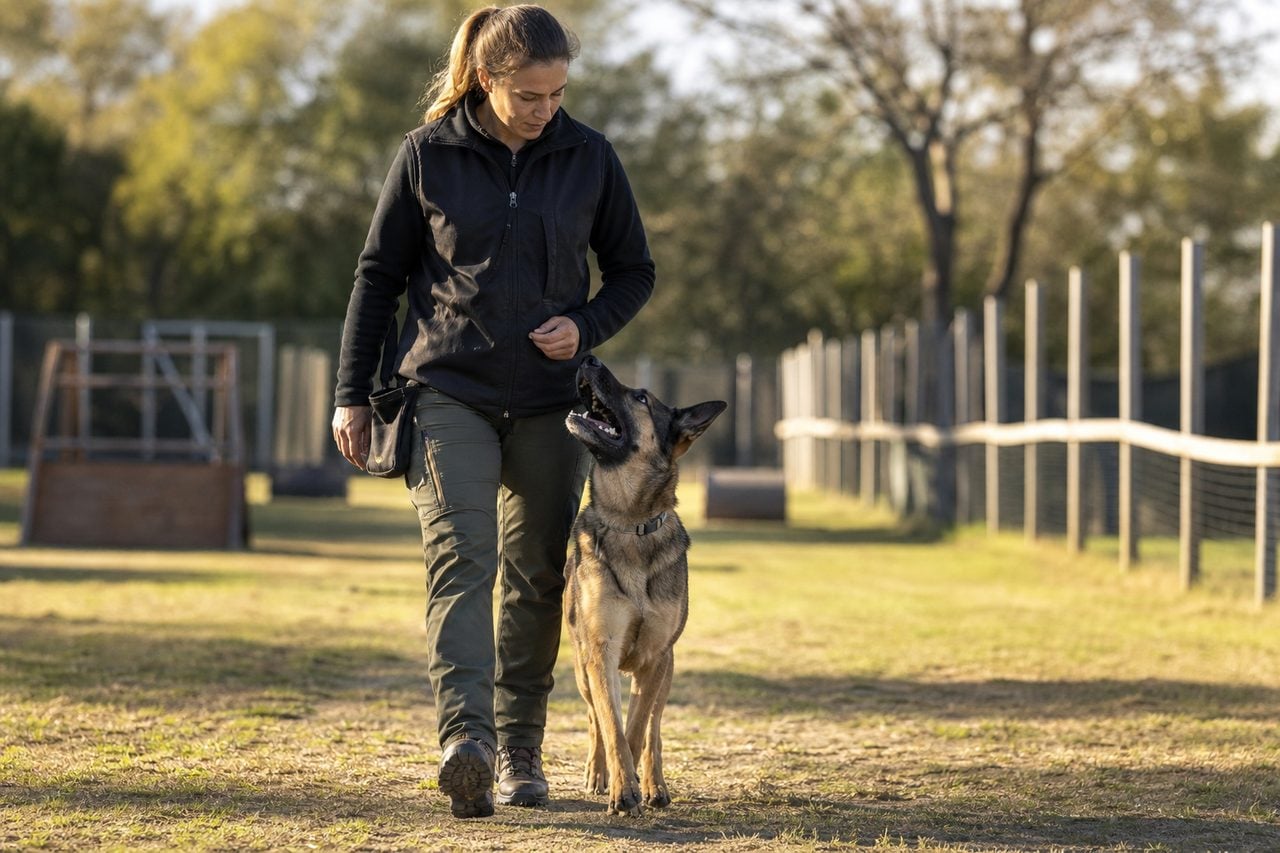
Board-and-train programs, where your dog stays with a trainer for an immersive period of daily instruction, can be an appealing option for busy Ann Arbor families or for dogs with challenges that feel overwhelming to tackle alone. Instead of attending weekly classes, your dog lives and learns with a professional for a set number of days or weeks, then comes home with a foundation of skills that you continue to reinforce.
But board-and-train is also one of the most misunderstood and variable services in the dog training world. Quality ranges enormously, methods differ dramatically, and the results depend heavily on the follow-up you do at home. This guide explains how board-and-train works, who it suits, what questions to ask before handing over your dog, and how to make sure the investment actually pays off long after your dog returns to your Washtenaw County home.
How Board-and-Train Programs Work
In a board-and-train program, your dog stays at a trainer’s facility or home for an agreed period, commonly ranging from about two weeks to several weeks, while the trainer works with them daily. The idea is immersion: rather than one class a week, your dog gets consistent, focused instruction from a professional in a controlled environment, which can accelerate learning for certain goals.
Programs vary widely in what they target. Some focus on foundational obedience like sit, down, stay, come, and loose-leash walking. Others specialize in specific problems such as leash reactivity, door manners, or crate training. Higher-intensity programs may tackle more serious behavioral issues, though the toughest cases often need ongoing work that no single stay can fully resolve. Be clear about your goals so you can find a program that matches them.
A crucial and often underappreciated feature is the handoff at the end. Because your dog learned the skills with the trainer, not with you, a good program includes transfer sessions where the trainer teaches you how to give the cues, reward correctly, and maintain the behavior. Without this, dogs frequently revert once home, because the human half of the equation never learned how to keep the training going.
Board-and-train is generally the most expensive training format because you are paying for boarding, daily professional attention, and facility costs together. Think of it in relative terms: it typically costs considerably more than a series of group classes or a package of private sessions. Whether it is worth the premium depends on your situation, your goals, and, above all, the quality and methods of the specific provider.
Who Board-and-Train Is Right For
Board-and-train is not the default best choice for every dog, but it fits certain situations well. Understanding whether your circumstances match the format will save you money and lead to better outcomes than following a trend or a persuasive sales pitch.
It can suit busy households that genuinely cannot commit to the daily practice that traditional training requires, at least for the initial skill-building phase. If your work and family schedule make consistent home training unrealistic right now, having a professional lay the foundation can jump-start progress. It can also help owners who feel in over their heads with a dog whose behavior has become unmanageable and who need an experienced hand to establish a baseline of skills.
Certain specific goals lend themselves to the immersive format too, such as intensive foundation obedience or focused work on a particular manners issue. Some owners use a board-and-train to get past a plateau, then continue with group classes or private sessions to maintain and build on the gains. In that sense it can be one stage in a longer plan rather than a complete solution on its own.
That said, be honest about the trade-offs. Board-and-train means less involvement in the actual learning, which can matter because training is also relationship-building. Some dogs, particularly anxious or fearful ones, may not do well being separated from their family and placed in an unfamiliar environment. And no program can install permanent obedience that survives without your follow-through. If you have the time and willingness, hands-on formats like group classes or private sessions often build a stronger owner-dog partnership for less money.
Questions to Ask Before You Commit
Because board-and-train involves handing your dog to someone else around the clock, due diligence is essential. Since dog training is unregulated, the burden is on you to vet the provider thoroughly. A trustworthy trainer will welcome these questions and answer them openly; evasiveness is a red flag.
Start with methods. Ask exactly what training techniques and equipment they use and how they handle unwanted behavior. You want a program grounded in positive-reinforcement, reward-based methods, consistent with mainstream veterinary behavior guidance. Be cautious of any provider who is vague about their methods or relies on pain, fear, or intimidation, especially in a setting where you will not be present to see how your dog is treated.
Ask about the daily reality of the stay. Where do the dogs sleep, how much of the day is training versus kenneled, how are dogs exercised and given downtime, and how many dogs are there per trainer? Ask whether you can tour the facility in person and whether they provide regular updates, photos, or videos of your dog’s progress. Transparency about the living conditions and the day-to-day routine is one of the best signals of a quality operation.
Finally, ask about credentials, experience with dogs like yours, and the transfer process. What certifications or continuing education does the trainer have? Have they worked successfully with your dog’s specific issue? How many handoff sessions are included, and what ongoing support do they offer after your dog comes home? Get the program details, guarantees, and refund policy in writing, and be skeptical of any promise of guaranteed results, since honest trainers know outcomes depend on the dog and your follow-up.
Vetting Methods and Safety
The single most important thing to verify in any board-and-train is how your dog will be treated when you are not there to see it. Because these programs are immersive and unsupervised by the owner, the methods matter even more than in a class you attend yourself. Choosing a humane, science-based program protects both your dog’s welfare and your long-term relationship with them.
Reward-based training builds behavior by reinforcing what you want, which creates confidence and trust. Aversive approaches that rely on pain, fear, or intimidation can suppress behavior in the short term but carry documented risks, including increased fear and anxiety and, in some cases, worsened aggression. This concern is amplified in a board-and-train because you cannot observe the daily handling. Insist on clarity about every tool and technique before you commit.
Prioritize physical safety and health too. Ask how the facility prevents disease spread, what vaccinations they require, how they handle emergencies and veterinary care, and whether staff are present or on call overnight. A clean, well-managed facility with clear health protocols reflects a provider who takes their responsibility seriously. Do not be shy about asking to see where the dogs actually stay rather than just a lobby or training room.
Trust your instincts throughout. If a provider resists a tour, cannot clearly explain their methods, discourages your questions, or makes you uneasy in any way, keep looking. Ann Arbor’s strong training community means you have alternatives, so there is no need to settle for a program that raises doubts. Reading reviews, asking for references from past clients, and consulting your veterinarian for recommendations are all reasonable steps before entrusting your dog to anyone’s care.
Making the Results Last at Home
The most expensive board-and-train in the world is wasted money if the training does not survive the return home. This is the part owners most often underestimate. Your dog learned new skills with a professional in a structured environment; keeping those skills alive in your everyday household is entirely up to you, and it requires ongoing effort.
Take the transfer sessions seriously. This is where you learn to give the cues the way your dog now understands them, reward at the right moments, and enforce the rules consistently. Practice under the trainer’s guidance until you feel confident, and ask questions about any situation you expect to face at home. The better you learn the handling, the more smoothly your dog will respond to you rather than only to the trainer.
Once home, maintain the structure your dog experienced during the program. Dogs thrive on consistency, and a dog that comes back to a household with no rules will quickly drift back toward old habits. Keep up short daily practice, ask for learned cues as part of normal routines, and make sure everyone in the family uses the same words and expectations. Weaving the skills into daily life is what makes them permanent.
Plan to keep building rather than treating the program as the finish line. Many owners get the most durable results by following a board-and-train with group classes or occasional private sessions to proof the skills around new distractions and to keep momentum. Practicing in real Ann Arbor settings, from the paths at Gallup Park to the downtown sidewalks, generalizes the training to the places you actually go. With consistent follow-through, the foundation your dog built during the program becomes a lasting part of who they are.
Alternatives Worth Considering First
Before committing to the cost and separation of a board-and-train, it is worth weighing the alternatives, because for many dogs and owners a hands-on format delivers comparable or better results for less money. Ann Arbor’s robust training scene gives you plenty of choices, so you can pick the format that genuinely fits your situation rather than defaulting to the most intensive option.
Group obedience classes are the most economical starting point and offer something board-and-train cannot: your dog learns to focus on you specifically, around real distractions, while you develop your own handling skills. Because you are the one doing the training, the learning transfers directly to daily life and strengthens your bond. For puppies and for owners who can commit to weekly sessions and home practice, a group class is often the smartest first step.
Private, in-home training sits between group classes and board-and-train. A trainer comes to you, addresses your dog’s specific issues in the environment where they actually occur, and coaches you directly. This is especially useful for reactivity, anxiety, or household-specific problems, and it keeps you fully involved in the process. Day training, where a trainer works with your dog during the day and then teaches you in shorter transfer sessions, is another middle path that reduces separation while still leveraging professional skill.
Consider your honest capacity and your dog’s temperament when choosing. If you have the time and willingness to do the work, hands-on formats build the strongest partnership. If your schedule truly prevents consistent practice or your dog’s issues feel unmanageable, a carefully vetted board-and-train can serve as a foundation-building stage, ideally followed by classes or private sessions. The best plan is the one that matches your life, your budget, and your particular dog, and Ann Arbor offers enough quality options to build exactly that.
Board & Train in Ann Arbor: Local Options & Nearest Specialists
A few Ann Arbor-area trainers can help with milder board & train needs:
- The Dog Wizard Ann Arbor — 5.0★ (152 reviews)
- Szegi Haus K9 Solutions — 4.7★ (75 reviews)
Nearest board & train specialists — Detroit
For complex cases, the closest metro with dedicated board & train trainers is Detroit (an easy drive for an assessment or a board-and-train stay). Top-reviewed options:
- From The Heart Dog Training — 5.0★ (82 reviews)
- Smart Dog Obedience — 5.0★ (54 reviews)
- My Sidekick Dog Training — 5.0★ (50 reviews)
- K9 AdvantEDGE Dog Training — 5.0★ (40 reviews)
- Connected Canine Academy — 5.0★ (16 reviews)
- Iron Clad K9 Training — 5.0★ (13 reviews)
- Tip Top K9 Sterling Heights Dog Training — 5.0★ (7 reviews)
- Sit Means Sit Dog Training Detroit — 4.9★ (688 reviews)
See all Detroit board & train trainers →
Frequently Asked Questions
How long does a board-and-train program usually last?
Programs commonly run from about two weeks to several weeks, depending on the goals and the provider. Foundation obedience programs tend to be shorter, while work on more challenging behavior may take longer. Keep in mind that the length of the stay matters less than the quality of the methods and the transfer sessions that teach you how to maintain the training once your dog comes home.
Is board-and-train worth the higher cost?
It depends on your situation. Board-and-train is typically the most expensive format because you pay for boarding, daily professional attention, and facility costs together, usually considerably more than group classes or private-session packages. It can be worth it for busy households or dogs whose behavior feels unmanageable, but only with a quality, humane provider and diligent follow-up at home. For many owners, hands-on formats build a stronger bond for less money.
What questions should I ask a board-and-train provider?
Ask exactly what methods and equipment they use and how they handle unwanted behavior, favoring positive-reinforcement approaches. Ask where dogs sleep, how much of the day is training versus kenneling, the dog-to-trainer ratio, and whether you can tour the facility and get progress updates. Also ask about certifications, experience with your dog’s issue, how many transfer sessions are included, and the refund policy, and get the details in writing.
Are board-and-train programs safe for my dog?
They can be, but safety depends entirely on the provider, and because you are not present, methods matter even more. Insist on humane, reward-based training, and be cautious of anyone relying on pain, fear, or intimidation, which carry documented risks. Verify health protocols, vaccination requirements, emergency and overnight care, and ask to see where dogs actually stay. If a provider resists questions or a tour, keep looking.
Will my dog remember the training after board-and-train?
Only if you follow through. Your dog learned the skills with a trainer, so you must take the transfer sessions seriously, maintain the same structure and cue words at home, and keep up short daily practice. Without consistent reinforcement, dogs often drift back toward old habits. Many owners get the most lasting results by following board-and-train with group classes or occasional private sessions to keep the skills sharp.
What are good alternatives to board-and-train in Ann Arbor?
Group obedience classes are the most economical option and teach your dog to focus on you while you build handling skills. Private in-home training addresses specific issues in your own environment and keeps you fully involved, which suits reactivity or anxiety. Day training is a middle path that reduces separation. Ann Arbor’s active training scene offers all of these, so you can match the format to your schedule, budget, and dog.
Related: read our complete board & train guide or the full Ann Arbor dog training overview.
Ready to find the right board & train pro in Ann Arbor?